2026 / UC Berkeley
Stride Recover Hamstring
Human-AI wearable concept for hamstring strain recovery
Overview
A low-friction smart wrap concept for recreational athletes recovering from hamstring strain, combining user research, AI-assisted synthesis, sEMG-inspired sensing, and simple return-to-play feedback.
Problem / Context
Recreational athletes often manage hamstring injuries without professional supervision. The core gap was not only measurement, but trustworthy guidance that fits existing training and recovery routines.
Role
Team project (Human-AI design) - UC Berkeley
Institution
UC Berkeley
Team
Loris Emanuelli and Human-AI design team
Tags
Human-AI / Wearables / Sports Engineering
Process
- - Ran semi-structured interviews and field observations with recreational athletes
- - Used AI to cluster interview themes, map concepts, and challenge design assumptions
- - Generated and screened roughly forty concepts for feasibility, novelty, and user fit
- - Mapped the recovery system around confidence, adherence, feedback accuracy, and alert fatigue
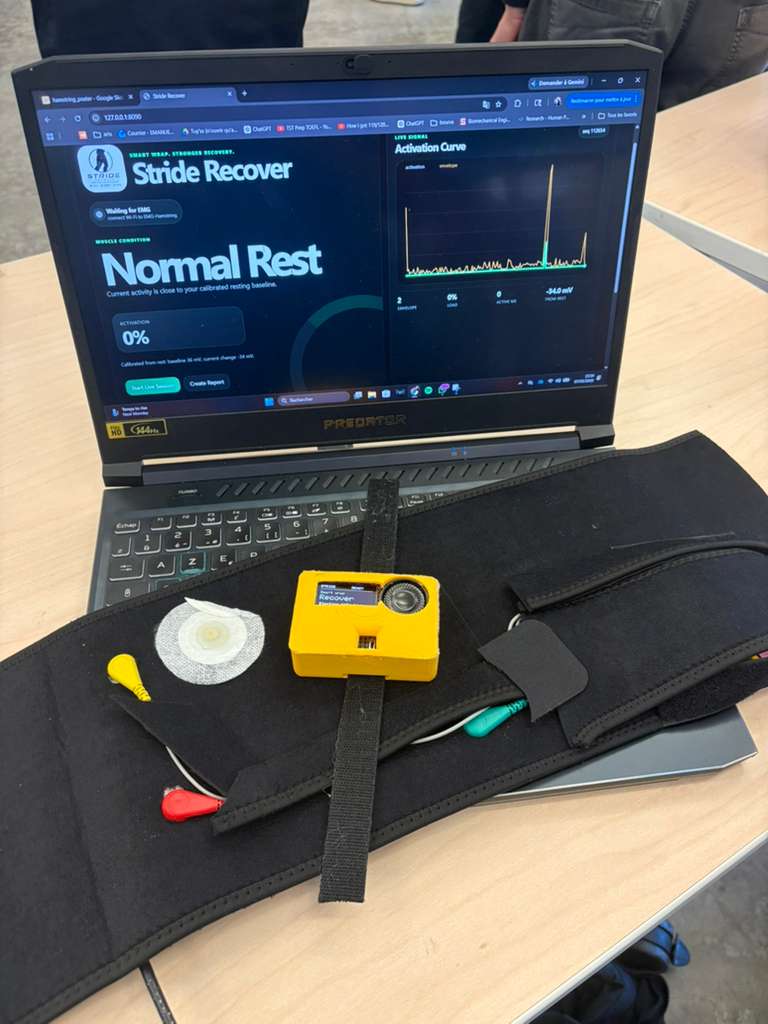
- - Built a physical wrap prototype with sensing electronics and dashboard mockups
- - Defined status states and exercise recommendations around readable recovery feedback
Key design decisions
- - Focused on confidence and routine integration instead of a purely technical sensing product
- - Used bilateral activation comparison and simple risk states to reduce interpretation burden
- - Kept the wearable form familiar so setup friction stayed low
- - Used AI as a synthesis and critique tool while keeping final decisions grounded in user evidence
Engineering details
- - Wearable sleeve / wrap prototype with electrode-style sensing points
- - Dashboard states for normal rest, attention, and danger
- - Adaptive feedback model linking user profile, regression modeling, live data inference, and suggested exercises
- - Prototype electronics and visual interface used to demonstrate recovery feedback behavior
Outcomes
- - Produced a complete design arc from research to physical prototype and interface concept
- - Identified trust, comfort, and setup effort as critical adoption constraints
- - Translated injury recovery uncertainty into a clearer feedback and exercise recommendation flow
- - Built portfolio-ready artifacts including poster, dashboard, prototype photos, and system model
Gallery
Physical wrap prototype with live dashboard
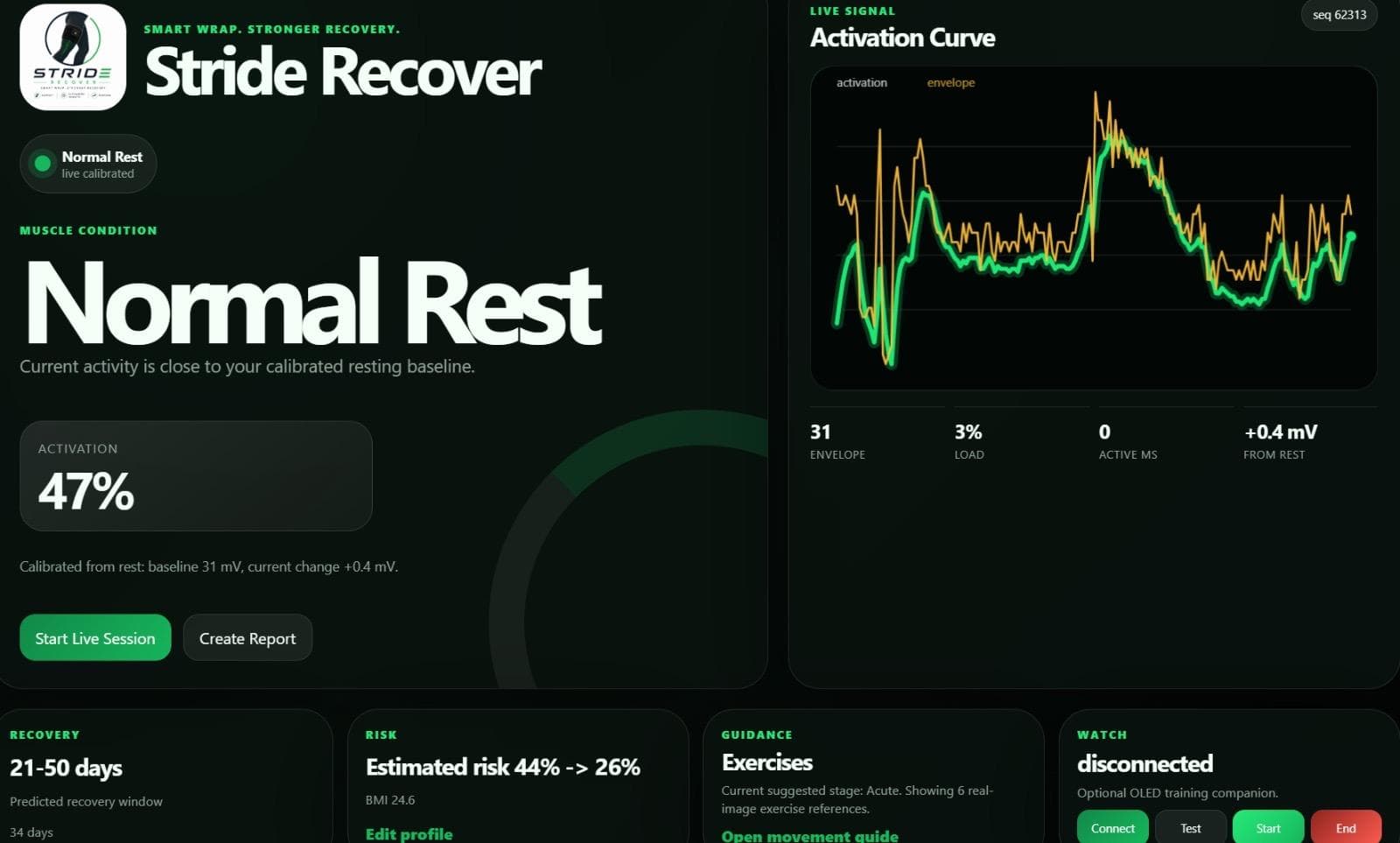
Normal-rest dashboard state
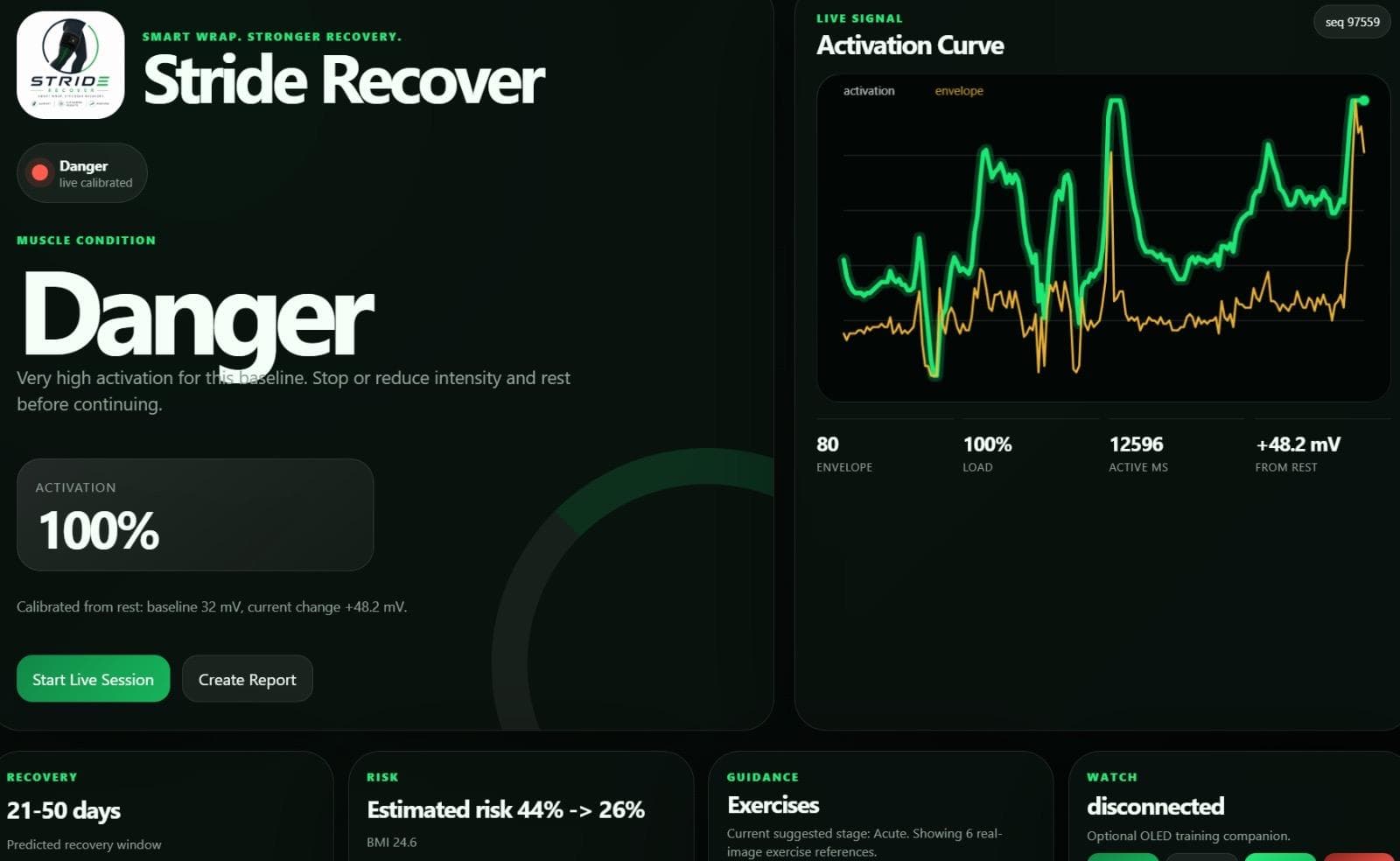
Danger dashboard state
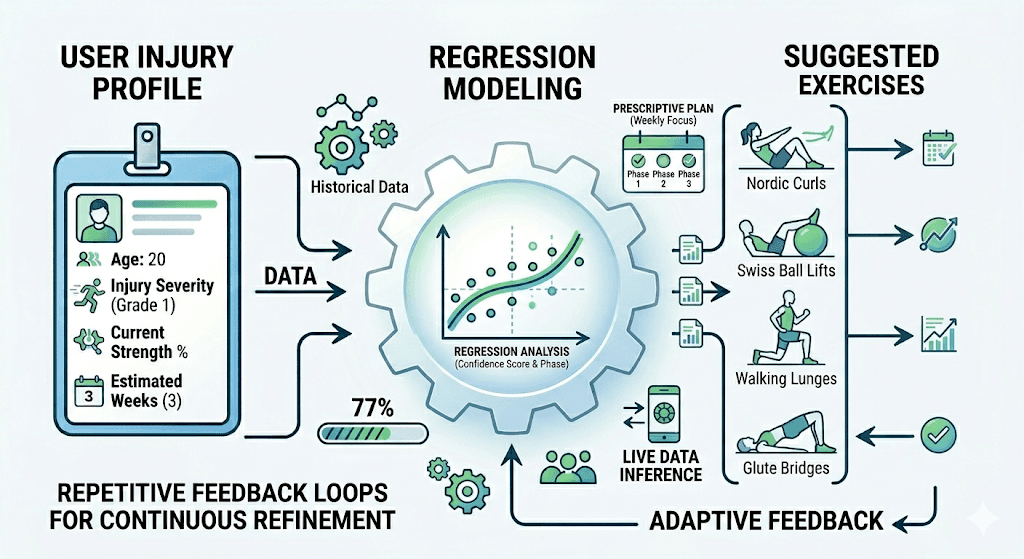
Adaptive recovery feedback model
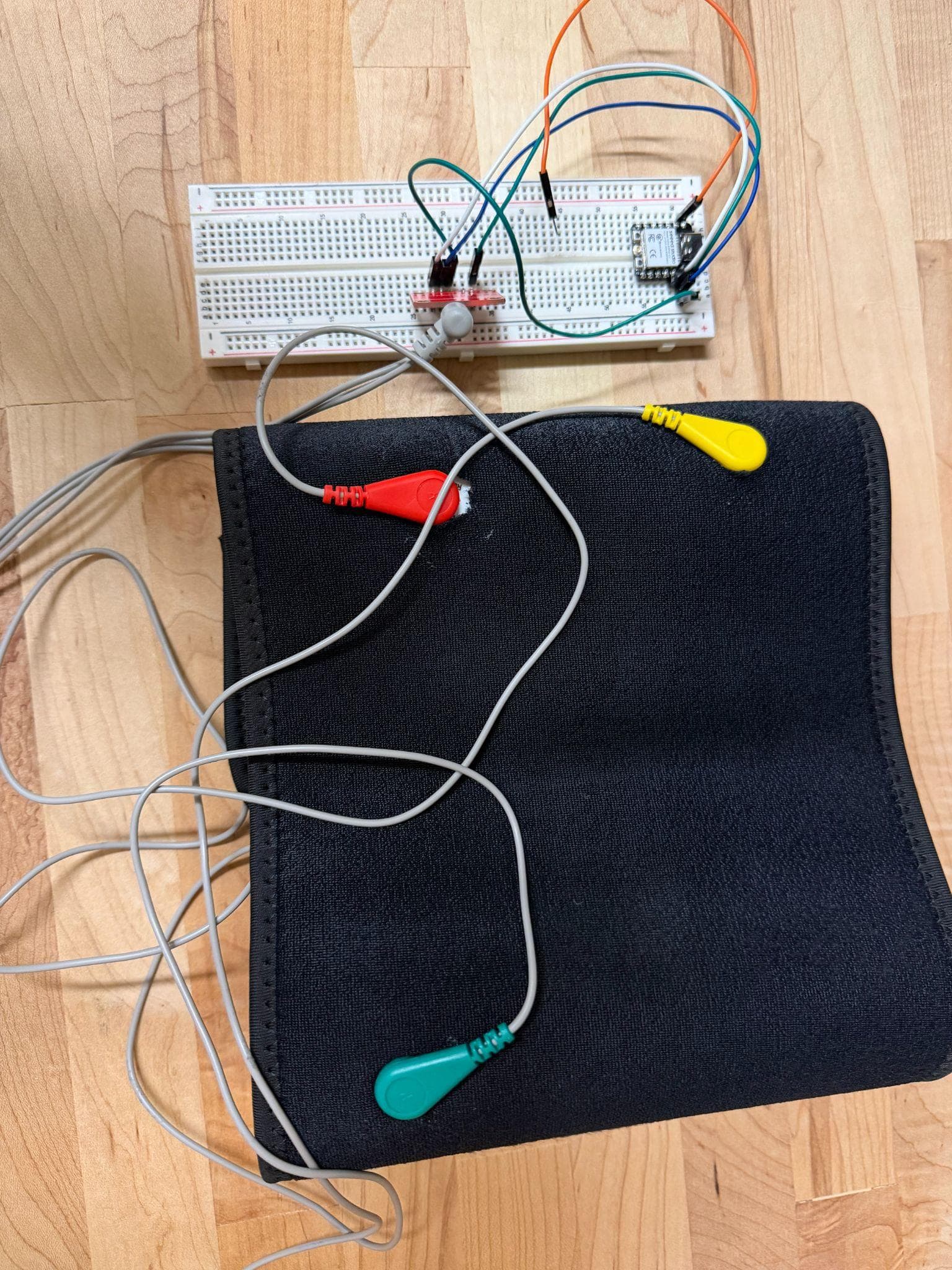
Early sensing sleeve prototype
Stride Recover brand and concept poster
What I would do next
- - Validate sensor placement and signal quality during controlled hamstring exercises
- - Run user testing on comfort, trust, and interpretation of risk states
- - Refine the dashboard into a mobile-first recovery workflow
- - Connect guidance recommendations to clinician-reviewed recovery protocols