2022 / Arts et Metiers Institute of Technology
Pediatric Prosthetic Foot
3D-printed foot prosthesis validated with testing and FEM
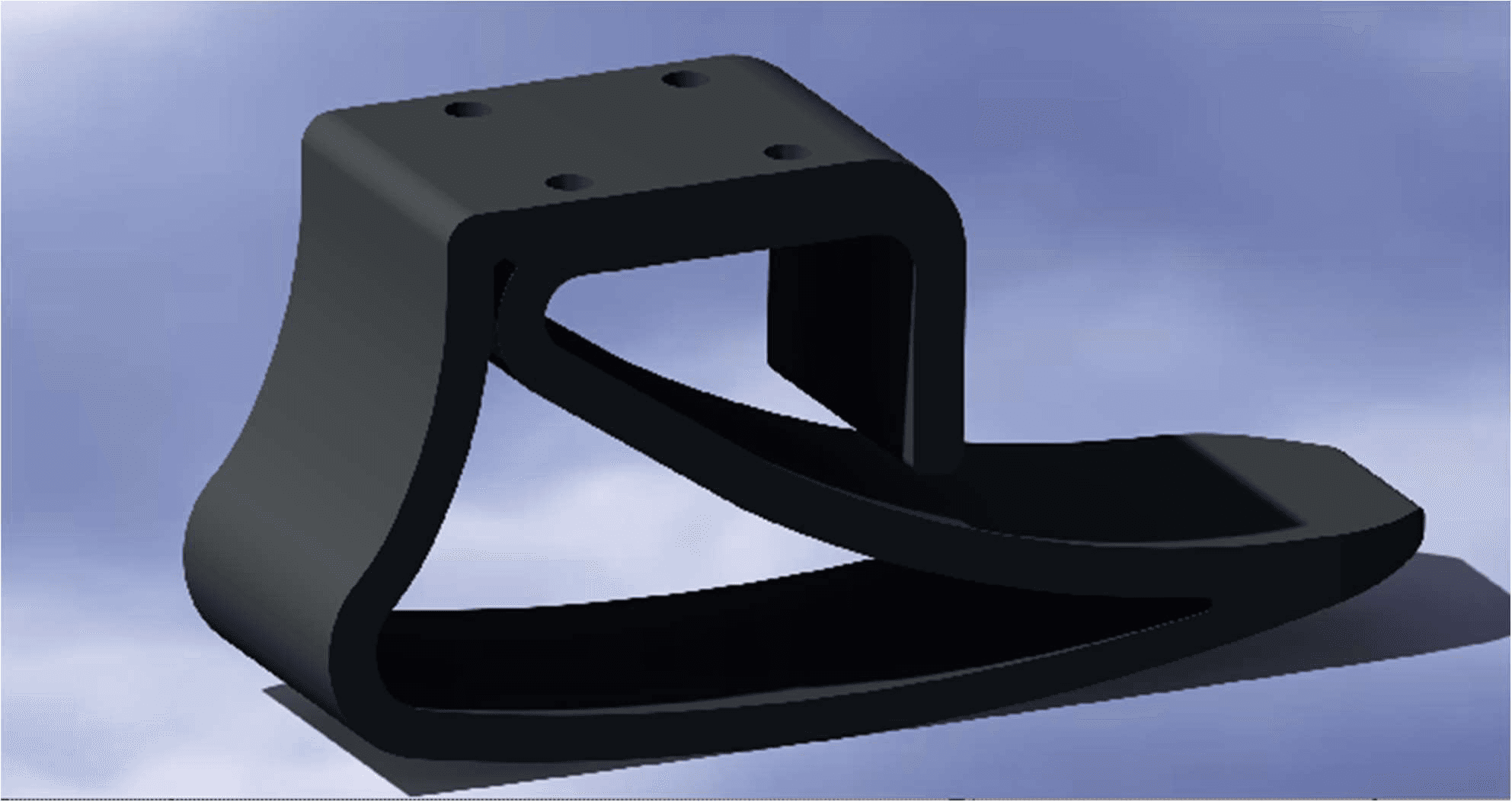
Overview
Design of a pediatric prosthetic foot for indoor daily use, combining motion analysis, mechanical sizing, CATIA modeling, PLA FDM prototyping, compression testing, and Abaqus validation.
Problem / Context
The prosthesis had to fit a EU 26 shoe, support an 800 N load, remain manufacturable by FDM printing, and provide enough flexibility for a natural gait instead of behaving like a rigid wooden leg.
Role
Team project (case study) - Arts et Metiers Institute of Technology
Institution
Arts et Metiers Institute of Technology
Team
Loris Emanuelli, Maxime Cros, Clement Roux, Julien Cardeillac
Tags
Biomechanics / CAD / FEA / Prototyping
Process
- - Defined functional requirements with bete a cornes and pieuvre diagrams
- - Benchmarked existing prosthetic foot geometries and material families
- - Analyzed gait and ground reaction data in MATLAB
- - Modeled successive prosthesis versions in CATIA V5
- - Printed the first PLA prototype and tested it in compression
- - Correlated experimental behavior with Abaqus simulations
Key design decisions
- - Kept FDM PLA as the imposed manufacturing route despite carbon-composite material benchmarks
- - Abandoned hook-style geometry in favor of a foot-like profile for comfort
- - Added a convex roll-over shape to smooth load transfer during gait
- - Rounded high-stress edges and increased wall thickness to improve final safety margin
Engineering details
- - Design inputs: EU 26 shoe, 20 kg child, 800 N maximum load, 8-degree dorsiflexion target
- - V1 survived 800 N compression but showed only about 2.7 mm displacement, making it too rigid
- - V2 targeted about 14 mm displacement around 200 N for improved comfort
- - Final Abaqus checks focused on Von Mises stress trends, mesh refinement, and PLA elastic limit comparison
Outcomes
- - Produced an iterative CAD and simulation workflow for a printable pediatric prosthetic foot
- - Validated that the first prototype met strength requirements but required compliance improvements
- - Converged toward a final design with softened stress concentrations and improved flexibility
Gallery
Final prosthetic foot CAD render
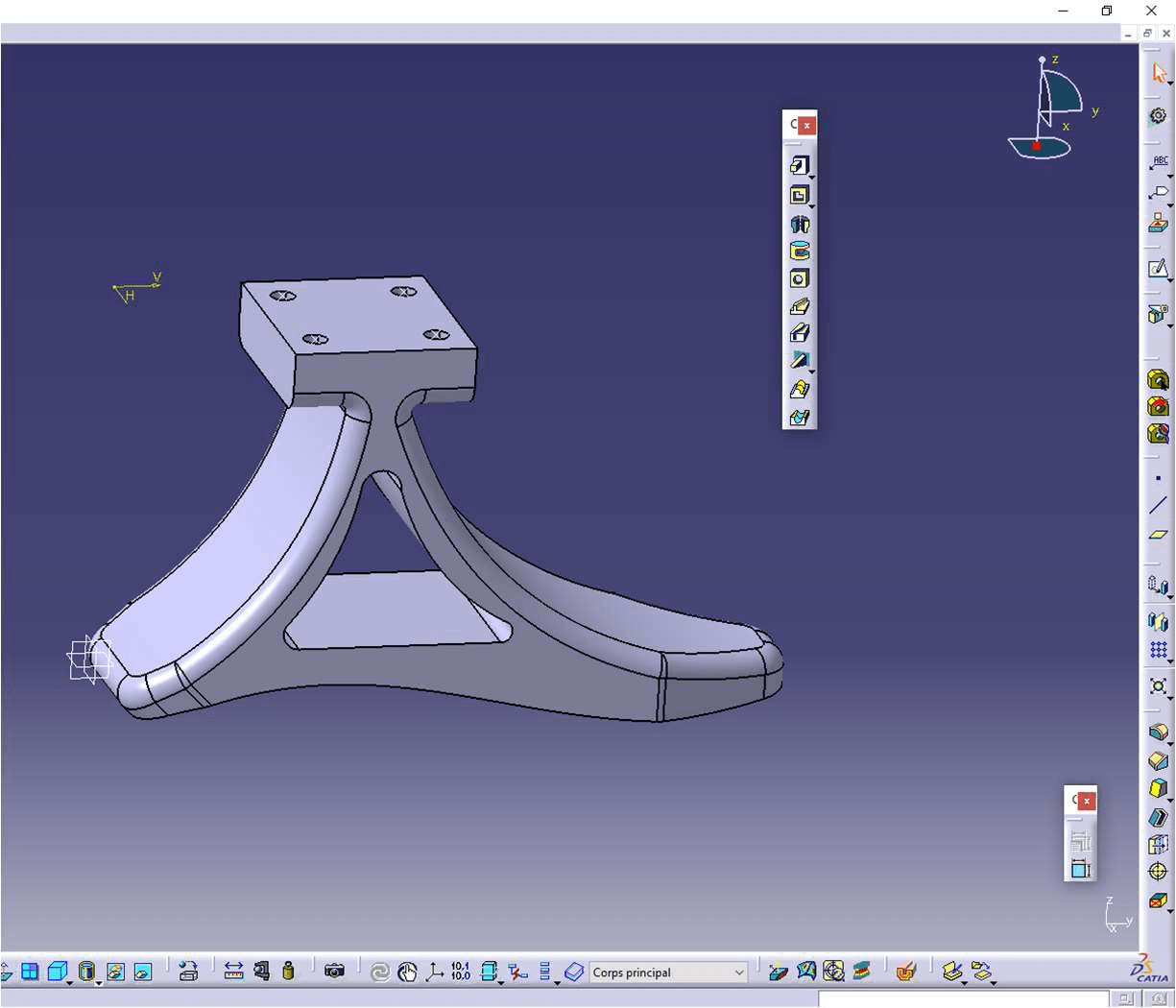
CATIA V5 first prosthesis version
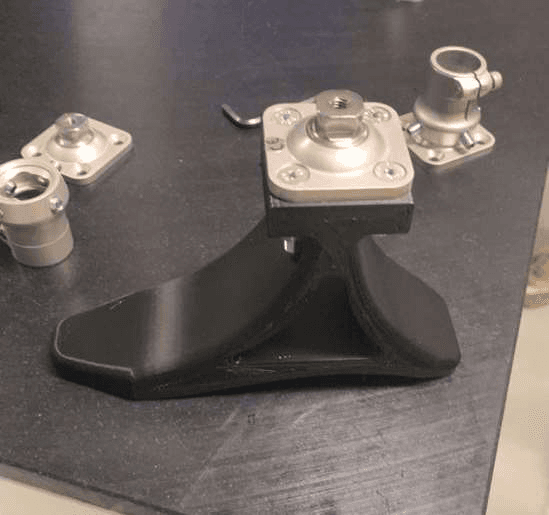
Printed PLA first prototype
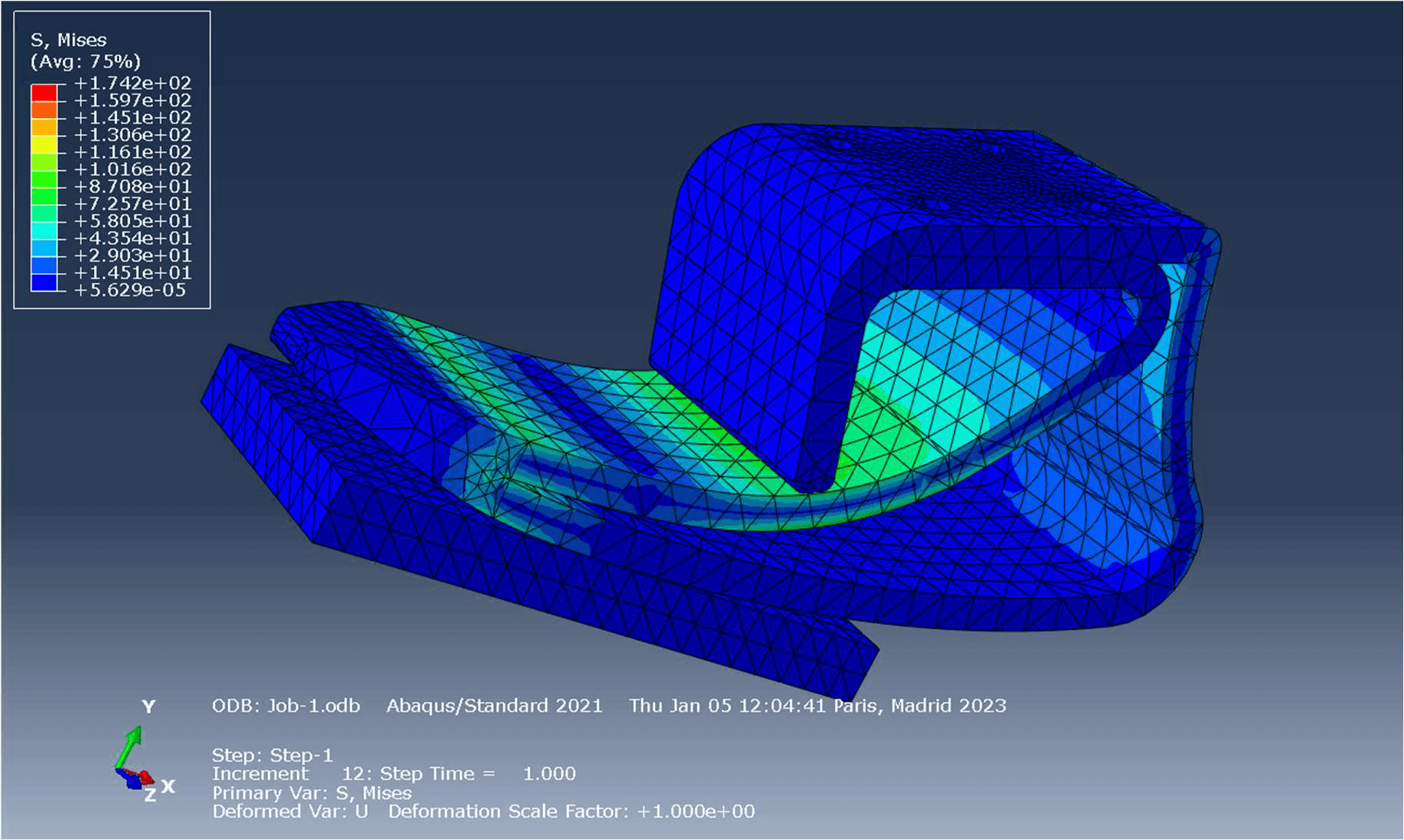
Abaqus stress field for the second version
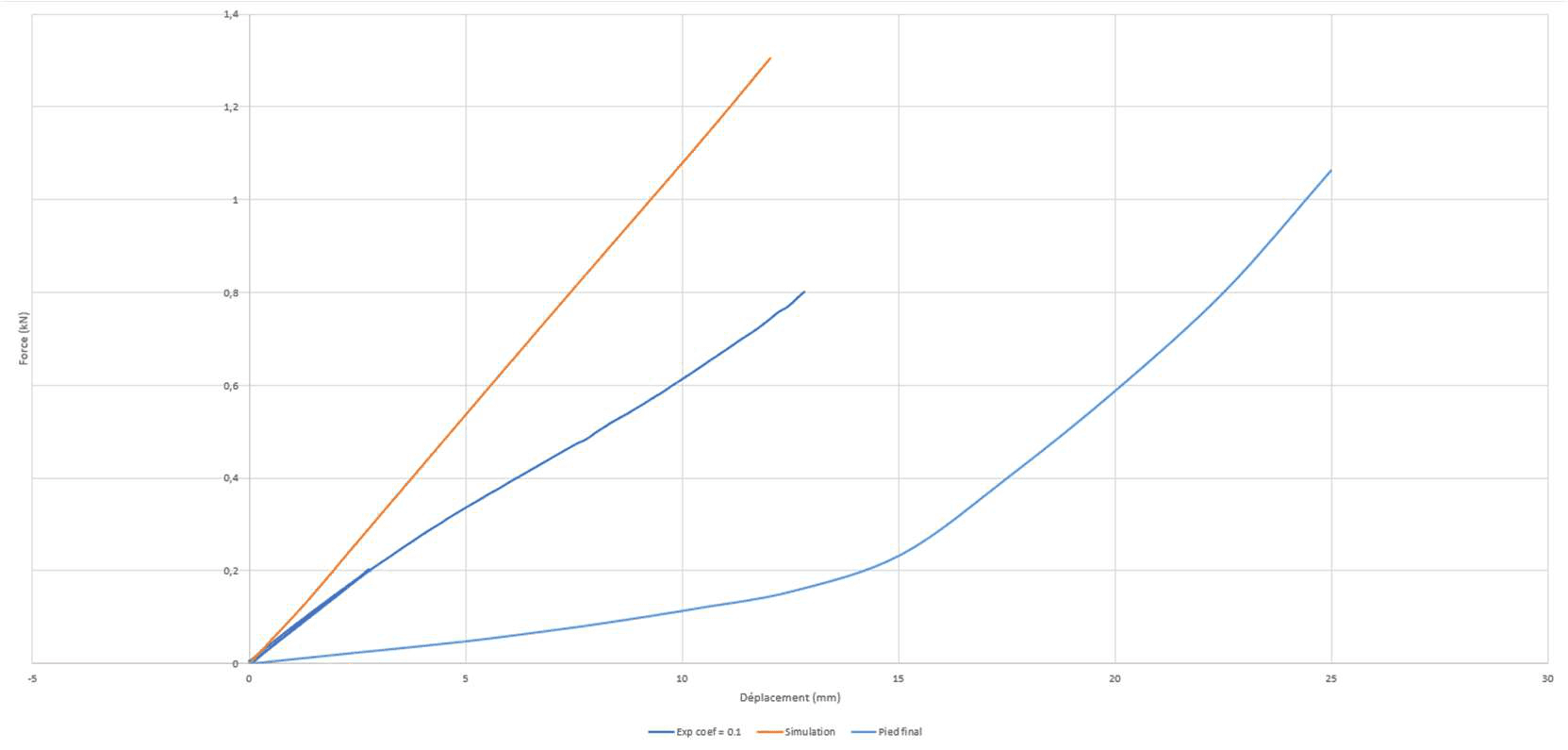
Force-displacement comparison for design iteration
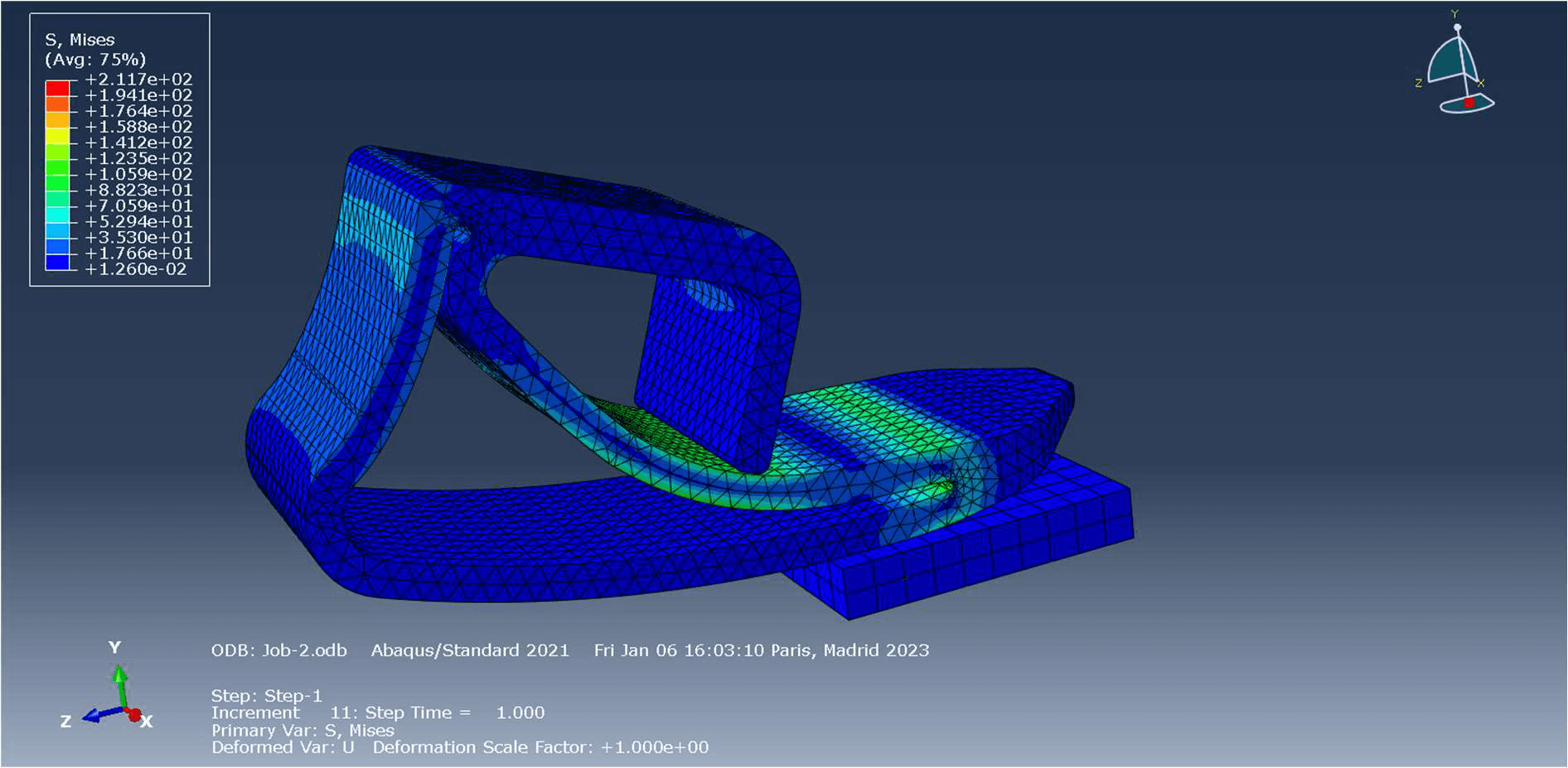
Final Abaqus stress validation
What I would do next
- - Print and mechanically test the final geometry
- - Run fatigue and repeated gait-cycle testing
- - Validate comfort with a more realistic socket and shoe interface